




The Genealogy of Morals
Résumé
Discover the Roots of Morality with Nietzsche's "The Genealogy of Morals"Friedrich Wilhelm Nietzsche's "The Genealogy of Morals" is a profound philosophical exploration that delves into the origins and development of human morality. In this seminal work, Nietzsche challenges traditional moral values, examining their historical emergence and psychological underpinnings. Through a series of interconnected essays, he investigates how concepts such as guilt, bad conscience, and ascetic ideals have shaped societal norms and individual consciousness. The book critically analyzes the dichotomy between "master morality" and "slave morality," revealing how power dynamics and ressentiment have influenced moral evolution. Nietzsche's incisive critique encourages readers to question accepted moral standards and consider the possibility of creating new values rooted in life-affirming principles. Rich with historical references, psychological insights, and philosophical rigor, "The Genealogy of Morals" remains a vital text for understanding the complex interplay between morality, culture, and human nature. Its provocative ideas continue to inspire debates in philosophy, psychology, and ethics, making it an essential read for those interested in the foundations of moral thought and the quest for authentic values.Friedrich Wilhelm Nietzsche (1844–1900) was a renowned German philosopher, cultural critic, poet, and philologist. Known for his profound influence on modern philosophy, Nietzsche challenged conventional beliefs and championed individualism, the will to power, and the concept of the Übermensch. His works, including "Thus Spoke Zarathustra," "Beyond Good and Evil," and "The Birth of Tragedy," have left an indelible mark on existentialism, nihilism, and postmodern thought. Nietzsche's incisive critique of morality and religion continues to resonate, making him one of the most influential thinkers of the 19th century.
Caractéristiques
Publication : 1 janvier 2026
Intérieur : Noir & blanc
Support(s) : eBook [ePub]
Contenu(s) : ePub
Protection(s) : Marquage social (ePub)
Taille(s) : 2,71 Mo (ePub)
Langue(s) : Anglais
Code(s) CLIL : 3129, 3126, 3916
EAN13 eBook [ePub] : 9782496771749
Avis
Ouvrages du même auteur
The Twilight of the Idols
How to Philosophize with the Hammer. The Antichrist

9,99 €
The Birth of Tragedy
or, Hellenism and Pessimism
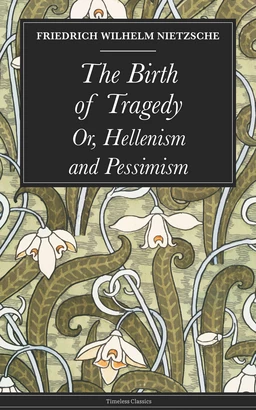
9,99 €

Human, All Too Human
A Book for Free Spirits
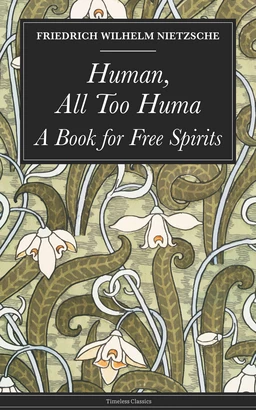
9,99 €

Thus Spake Zarathustra
A Book for All and None

9,99 €