




Company K. Illustrated
Résumé
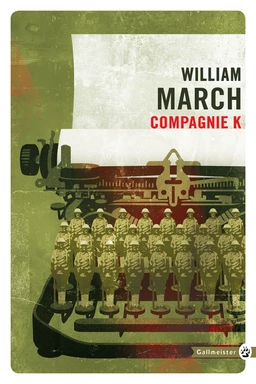
Company K by William March is a powerful and unconventional portrayal of war, offering a stark and deeply human account of soldiers’ experiences during World War I.Rather than following a single narrative line, the novel is composed of a series of brief, interconnected monologues—each voiced by a different member of Company K. Through these fragmented perspectives, March presents a mosaic of memories, emotions, and moral conflicts, revealing the psychological toll of war on ordinary men.The soldiers recount moments of fear, guilt, brutality, and disillusionment, often reflecting on actions that haunt them long after the battlefield has fallen silent. There is no glorification of heroism; instead, the novel exposes the chaos, randomness, and moral ambiguity of combat, emphasizing the lasting impact of violence on the human conscience.March’s restrained and direct prose heightens the emotional intensity of these voices, allowing each testimony to stand on its own while contributing to a larger, haunting portrait of war. The result is a deeply affecting work that challenges conventional narratives of military glory.Raw, innovative, and profoundly moving, Company K remains a landmark anti-war novel—an unflinching exploration of memory, trauma, and the enduring consequences of conflict.
Caractéristiques
Publication : 7 mai 2026
Intérieur : Noir & blanc
Support(s) : eBook [ePub]
Contenu(s) : ePub
Protection(s) : Aucune (ePub)
Taille(s) : 1 Mo (ePub)
Langue(s) : Anglais
EAN13 eBook [ePub] : 9786178886141
Avis
Ouvrages du même auteur
The Classic Collection of William March. Illustrated
The Bad Seed, Company K

0,99 €

Compagnie K
À partir de 7,99 €