



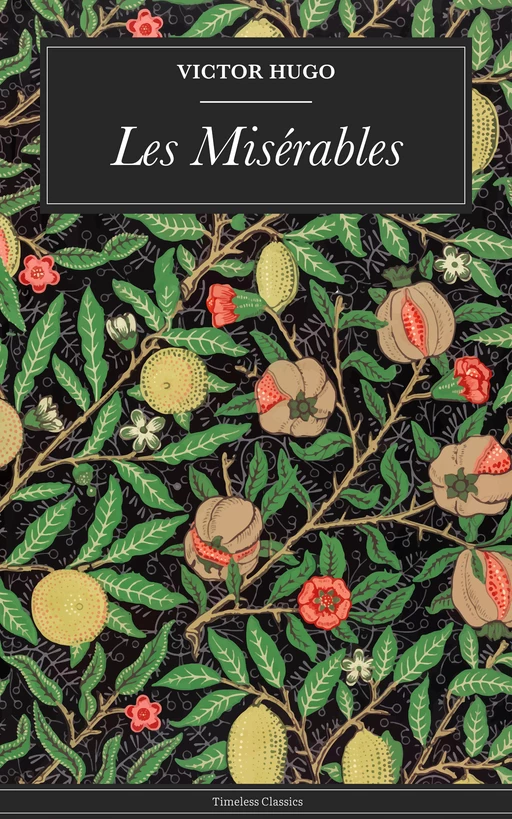
Les Misérables
Résumé
Discover the timeless epic of justice, redemption, and human resilience with Victor Hugo's Les Misérables. This monumental novel weaves the lives of unforgettable characters against the turbulent backdrop of 19th-century France, exploring themes of love, sacrifice, and social injustice.Les Misérables is a profound narrative that delves into the struggles of ex-convict Jean Valjean as he seeks redemption and a new life, while being relentlessly pursued by the relentless policeman Javert. Alongside their stories, Hugo introduces a rich tapestry of characters, including the tragic Fantine, the resilient Cosette, and the revolutionary Marius. The novel vividly portrays the stark contrasts between the oppressed and the privileged, highlighting the societal inequalities of the time. Through its detailed descriptions and compelling storytelling, Les Misérables offers a powerful critique of social injustice and a call for compassion and moral integrity. Its exploration of themes such as love, faith, and the pursuit of justice continues to resonate with readers today, making it a cornerstone of classic literature. Hugo’s masterful storytelling and deep philosophical insights make this book not just a story of individual lives but a reflection on the human condition and the possibility of redemption.Victor Hugo (1802–1885) was a renowned French poet, novelist, and dramatist, celebrated as one of the greatest writers of the Romantic movement. His works often addressed social issues and championed human rights, earning him a prominent place in literary history. Hugo’s literary legacy includes not only Les Misérables but also The Hunchback of Notre-Dame, which similarly explores themes of social justice and human compassion. His influence extends beyond literature into politics and social activism, making him a pivotal figure in French cultural and political life.
Caractéristiques
Publication : 1 janvier 2026
Intérieur : Noir & blanc
Support(s) : eBook [ePub]
Contenu(s) : ePub
Protection(s) : Marquage social (ePub)
Taille(s) : 12 Mo (ePub)
Langue(s) : Anglais
Code(s) CLIL : 3436, 3443, 3489
EAN13 eBook [ePub] : 9782496770735