



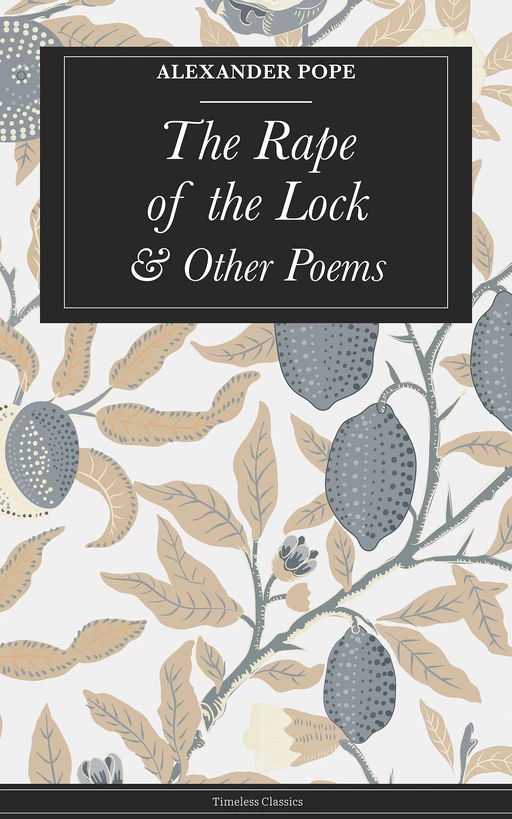
The Rape of the Lock
Résumé
Discover the wit and satire of 18th-century society with Alexander Pope's "The Rape of the Lock." This brilliant mock-epic poem humorously explores themes of vanity, social status, and trivial disputes, capturing the absurdities of aristocratic life through sharp wit and poetic mastery.Published in 1712, "The Rape of the Lock" is a masterful satirical work that elevates a petty quarrel over a stolen lock of hair into a grand, epic narrative. Pope's clever use of heroic couplets and classical allusions creates a playful yet insightful commentary on the superficiality and frivolity of high society. The poem's humorous tone and vivid imagery make it a timeless reflection on human vanity and the importance placed on appearances. Through its witty portrayal of characters and social customs, the poem invites readers to consider the absurdity of trivial conflicts and the societal obsession with beauty and status. Its enduring relevance lies in its sharp critique of social pretensions, making it a significant work in the canon of English literature and satire.Alexander Pope (1688–1744) was a renowned English poet celebrated for his satirical verse, mastery of the heroic couplet, and keen social commentary. Despite facing physical disabilities, Pope's literary genius shone through in works like "The Rape of the Lock," "The Iliad" (translated), and "The Dunciad." His poetry is characterized by its wit, precision, and moral insight, establishing him as one of the most influential poets of the Augustan age. Pope's work continues to be admired for its craftsmanship and incisive critique of human follies.
Caractéristiques
Publication : 1 janvier 2026
Intérieur : Noir & blanc
Support(s) : eBook [ePub]
Contenu(s) : ePub
Protection(s) : Marquage social (ePub)
Taille(s) : 1,37 Mo (ePub)
Langue(s) : Anglais
Code(s) CLIL : 3633, 3436, 3440
EAN13 eBook [ePub] : 9782496771886