


Apology
Résumé
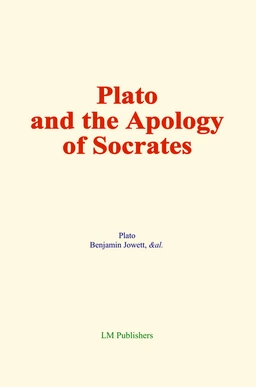
Discover the Wisdom of Socrates in Plato's "Apology" – A Timeless Defense of Philosophy and IntegrityPlato's "Apology" offers a profound insight into the life and philosophy of Socrates, one of history's most influential thinkers. Written as a record of Socrates' defense during his trial in 399 BCE, this work captures the essence of his unwavering commitment to truth, virtue, and the pursuit of knowledge. Socrates faces accusations of corrupting the youth and impiety with remarkable courage, articulating his beliefs and challenging societal norms. The "Apology" is not merely a courtroom speech; it is a philosophical manifesto that explores themes of ethics, the examined life, and the importance of intellectual humility. Through Socrates' words, readers are invited to reflect on the nature of justice, the role of the individual in society, and the pursuit of moral integrity. This work remains a cornerstone of Western philosophy, inspiring countless generations to seek truth and live authentically. Whether you are a student of philosophy, a lover of classical literature, or someone interested in the enduring questions of human existence, "Apology" offers valuable lessons on courage, wisdom, and the importance of standing firm in one's convictions.About the Author:Plato (c. 428–348 BCE) was a Greek philosopher, student of Socrates, and teacher of Aristotle. He founded the Academy in Athens, one of the earliest institutions of higher learning in the Western world. Plato's writings encompass a wide range of philosophical topics, including ethics, politics, metaphysics, and epistemology. His dialogues, including "The Republic," "Phaedo," and "Apology," have profoundly shaped Western thought and continue to be studied for their insights into human nature and the pursuit of truth.
Caractéristiques
Publication : 1 janvier 2026
Intérieur : Noir & blanc
Support(s) : eBook [ePub]
Contenu(s) : ePub
Protection(s) : Marquage social (ePub)
Taille(s) : 1,41 Mo (ePub)
Langue(s) : Anglais
Code(s) CLIL : 3127, 3126, 3916
EAN13 eBook [ePub] : 9782496772340