


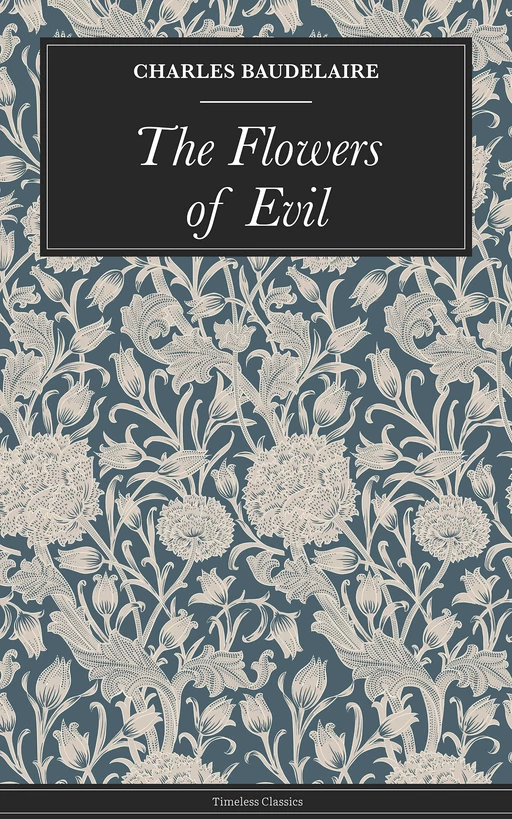
The Flowers of Evil
Résumé
Discover the Dark Beauty of Humanity with "The Flowers of Evil" by Charles Baudelaire"The Flowers of Evil" is a groundbreaking collection of poetry that delves into the complex facets of human nature, exploring themes of beauty, decadence, love, and despair. Baudelaire's masterful use of language and innovative poetic forms create a vivid tapestry of emotions and ideas, challenging conventional moralities and inviting readers to confront the darker sides of existence. This collection, first published in 1857, is renowned for its profound influence on modern poetry and its daring exploration of taboo subjects. Baudelaire's poems evoke a sense of melancholy and longing, capturing the contradictions of urban life and the fleeting nature of pleasure. Through his evocative imagery and lyrical mastery, Baudelaire invites readers to reflect on the dualities of beauty and ugliness, virtue and vice, life and death. "The Flowers of Evil" remains a timeless work that continues to inspire poets, artists, and thinkers, offering a compelling glimpse into the soul of 19th-century Paris and the universal human condition.Charles Baudelaire (1821–1867) was a French poet, critic, and essayist, widely regarded as one of the most influential figures in the history of modern poetry. His innovative approach to language and form challenged traditional poetic conventions, paving the way for Symbolism and Modernism. Baudelaire's keen observations of urban life, combined with his profound philosophical insights, earned him both acclaim and controversy. His work often explores themes of decadence, existential angst, and the search for transcendence amid the chaos of modernity. Despite facing censorship and criticism during his lifetime, Baudelaire's legacy endures through his pioneering contributions to literature, making him a central figure in the canon of French and world poetry.
Caractéristiques
Publication : 1 janvier 2026
Intérieur : Noir & blanc
Support(s) : eBook [ePub]
Contenu(s) : ePub
Protection(s) : Marquage social (ePub)
Taille(s) : 2,84 Mo (ePub)
Langue(s) : Anglais
Code(s) CLIL : 3633, 3436, 3440
EAN13 eBook [ePub] : 9782496772494