



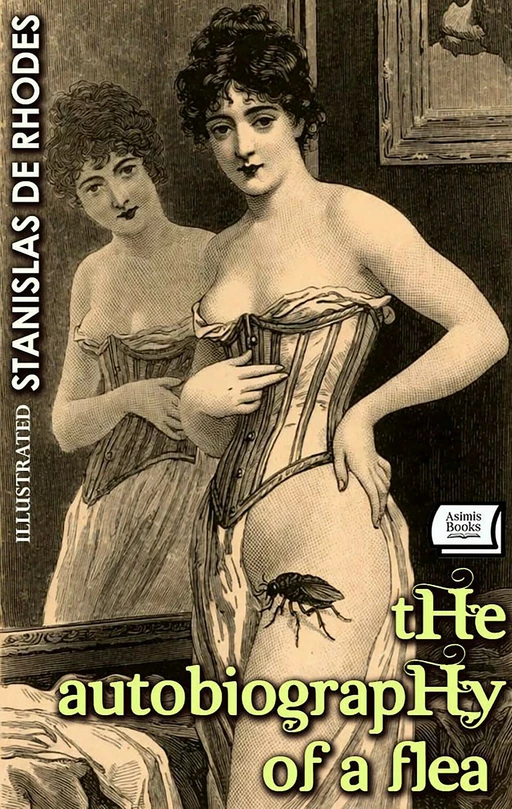
The Autobiography of a Flea. Illustrated
Résumé
The Autobiography of a Flea by Stanislas de Rhodes is a curious and provocative work of satirical literature that blends humor, social commentary, and ribald fantasy. Written as a mock autobiography narrated by a flea, the book uses its unusual perspective to offer a playful yet sharply observant account of human behavior across different social classes and intimate settings.Through the flea’s wandering life—from the bodies of nobles and clergy to those of courtesans and common folk—the narrative exposes the hypocrisies, vices, and vanities of society. The flea, an invisible witness to private moments, becomes an ironic commentator on morality, power, and desire. Its position allows it to observe what humans try hardest to conceal, turning the smallest of creatures into a vehicle for outsized truths.The work belongs to a long tradition of libertine and satirical writing in which unconventional narrators are used to critique social norms. While often playful and deliberately scandalous, the text also reflects Enlightenment-era skepticism toward authority and conventional morality. Its humor frequently relies on exaggeration, irony, and the contrast between respectable appearances and hidden behavior.The Autobiography of a Flea gained notoriety for its frankness and was long circulated as a forbidden or clandestine book. Today it is read less for shock value than for its inventive narrative device and its place in the history of satirical and erotic literature.Both mischievous and insightful, the book remains a striking example of how satire can use fantasy and humor to illuminate human nature in all its contradictions.
Caractéristiques
Publication : 19 janvier 2026
Intérieur : Noir & blanc
Support(s) : eBook [ePub]
Contenu(s) : ePub
Protection(s) : Aucune (ePub)
Taille(s) : 1,37 Mo (ePub)
Langue(s) : Anglais
EAN13 eBook [ePub] : 9786178790684